Decoshow V 1 1 9 Fr Seriale
Posted on by admin
Decoshow V 1 1 9 Fr Seriale Average ratng: 9,1/10 8545 reviews
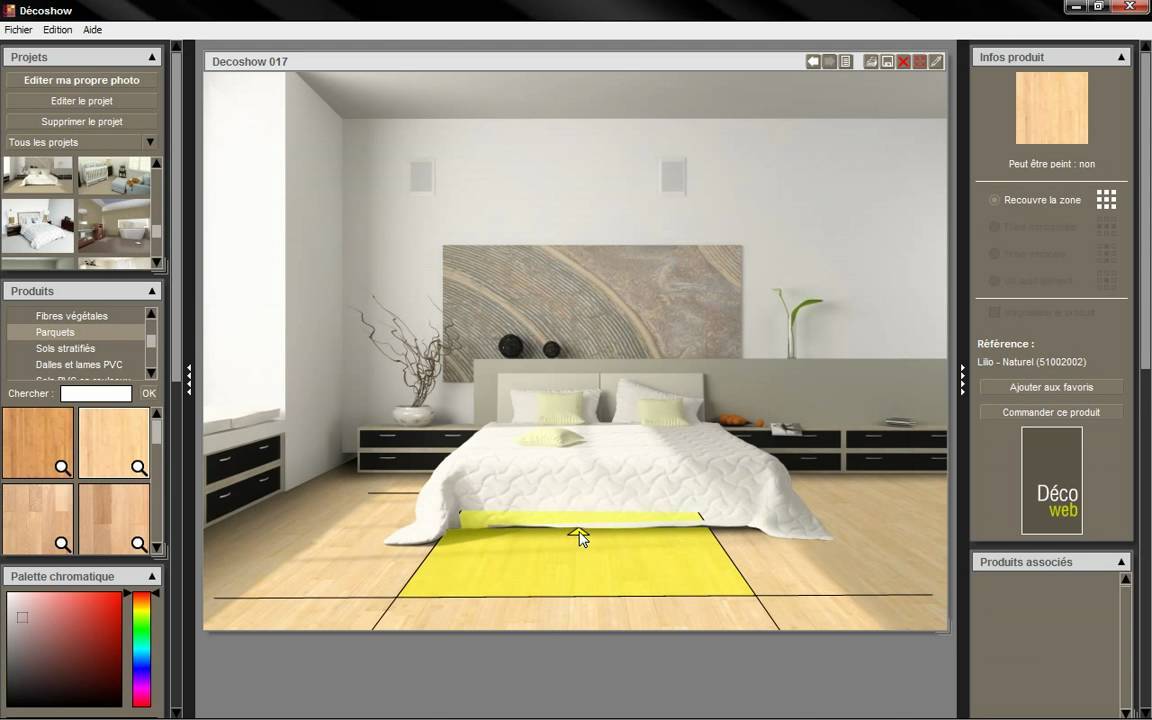
Décoshow, logiciel de simulation de décoration de vos propres pièces ou façades, à partir de photos numériques
Decoshow has a mediocre Google pagerank and bad results in terms of Yandex topical citation index. We found that Decoshow.com is poorly ‘socialized’ in respect to any social network. According to Siteadvisor and Google safe browsing analytics, Decoshow.com is quite a safe domain with no visitor reviews. Does it Works for Q88DB but V.1.1 instead 1.2? Im searching for it, the assemble hard case say 'Chromo Tablet' and the motherboard say ForFun Q88DB v.1.1 Touch: YDT1152-A1 display: 4039-DDT somebody help x.x.
69/100
Normal result7
Successful tests1
Failed test
First response
333 ms
Resources loaded
1.4 sec
Page rendered
175 ms
Total page load time
2 sec
Welcome to decoshow.com homepage info - get ready to check De Coshow best content right away, or after learning these important things about decoshow.com
We analyzed Decoshow.com page load time and found that the first response time was 333 ms and then it took 1.6 sec to load all DOM resources and completely render a web page. This is quite a good result, as only 30% of websites can load faster.
In fact, the total size of Decoshow.com main page is 181.0 kB. This result falls beyond the top 1M of websites and identifies a large and not optimized web page that may take ages to load. 20% of websites need less resources to load. Images take 80.8 kB which makes up the majority of the site volume.
HTML optimization
HTML content can be minified and compressed by a website’s server. The most efficient way is to compress content using GZIP which reduces data amount travelling through the network between server and browser. This page needs HTML code to be minified as it can gain 20.0 kB, which is 41% of the original size. It is highly recommended that content of this web page should be compressed using GZIP, as it can save up to 43.2 kB or 88% of the original size.
Image optimization
Image size optimization can help to speed up a website loading time. The chart above shows the difference between the size before and after optimization. Obviously, De Coshow needs image optimization as it can save up to 33.9 kB or 42% of the original volume. The most popular and efficient tools for JPEG and PNG image optimization are Jpegoptim and PNG Crush.
JavaScript optimization
It’s better to minify JavaScript in order to improve website performance. The diagram shows the current total size of all JavaScript files against the prospective JavaScript size after its minification and compression. It is highly recommended that all JavaScript files should be compressed and minified as it can save up to 33.6 kB or 66% of the original size.
Network requests diagram

- decoshow.com
- ga.js
- AC_RunActiveContent.js
- __utm.gif
- pixelGris.gif
- bar_1.gif
- img_1.gif
- img_1-1.gif
- img_1-3.gif
- img_1-5.gif
- img_1-7.gif
- img_1-2.gif
- img_1-4.gif
- img_1-6A.gif
- img_1-8.gif
- trans.gif
- img_2_1.gif
- img_3.gif
- img_3-1.gif
- img_3-2.gif
- img_3-3A.gif
- img_3-4.gif
- img_4.gif
- img_5.gif
- img_6.gif
- img_7.gif
- img_2_2.gif
- img_9.gif
- img_10_index.gif
- img_8.gif
- AccueilPro.gif
- img_11.gif
- img_12.gif
- img_42.gif
- img_13.gif
- img_17.gif
- img_18_4.gif
- img_18_3.gif
- tele.gif
- img_18_1.gif
- like.php
- img_18_2.gif
- img_19.gif
- img_20.gif
- img_21.jpg
- img_22.jpg
- img_41.gif
- facebook_27.gif
- qeKvIRsJabD.js
- LVx-xkvaJ0b.png
- cadenas.gif
- amex.gif
- cb.gif
- visa.gif
- mastercard.gif
- bar_2.gif
- img_5_over.gif
- img_6_over.gif
- img_7_over.gif
Our browser made a total of 59 requests to load all elements on the main page. We found that 92% of them (54 requests) were addressed to the original Decoshow.com, 3% (2 requests) were made to Google-analytics.com and 3% (2 requests) were made to Static.xx.fbcdn.net. The less responsive or slowest element that took the longest time to load (649 ms) belongs to the original domain Decoshow.com.
Requests
The browser has sent 58 CSS, Javascripts, AJAX and image requests in order to completely render the main page of De Coshow. We recommend that multiple CSS and JavaScript files should be merged into one by each type, as it can help reduce assets requests and as a result speed up the page load time.
Javascripts
Images
AJAX
All
Possible request optimization
Javascripts
Images
AJAX
Optimized
All
IP address
Decoshow.com uses IP address which is currently shared with 1 other domain. The more sites share the same IP address, the higher the host server’s workload is. It is strongly recommended that the host server should be changed or the hosting provider should be requested to give a different (separate) IP address for this domain.
tapis-sur-mesure.fr
62.4.0.155
DNS records
| Type | Host | Target/ip | TTL | Other |
|---|---|---|---|---|
| A | decoshow.com | 62.4.0.155 | 10793 | |
| NS | decoshow.com | ns-246-a.gandi.net | 10800 | |
| NS | decoshow.com | ns-8-b.gandi.net | 10800 | |
| NS | decoshow.com | ns-177-c.gandi.net | 10800 | |
| SOA | decoshow.com | 10800 | Mname: ns1.gandi.net Rname: hostmaster.gandi.net Serial: 1547078400 Refresh: 10800 Retry: 3600 Expire: 604800 Minimum-ttl: 10800 |
Language
FR
Claimed
Language claimed in HTML meta tag should match the language actually used on the web page. Otherwise Decoshow.com can be misinterpreted by Google and other search engines. Our service has detected that French is used on the page, and it matches the claimed language. Our system also found out that Decoshow.com main page’s claimed encoding is iso-8859-1. Changing it to UTF-8 can be a good choice, as this format is commonly used for encoding all over the web and thus their visitors won’t have any troubles with symbol transcription or reading.
Similarly rated websites
HTTPS certificate
Decoshow.com has no SSL certificate. Web browsing can be safer with HTTPS connection, so we suggest that it should be obtained for this site.
Visitor World Map
The server of Decoshow.com is located in France, but, unfortunately, we cannot identify the countries where the visitors come from and thus it’s impossible to define if the distance can potentially affect the page load time.

Ratings of similarly popular websites
Social Sharing Optimization
Open Graph description is not detected on the main page of De Coshow. Lack of Open Graph description can be counter-productive for their social media presence, as such a description allows converting a website homepage (or other pages) into good-looking, rich and well-structured posts, when it is being shared on Facebook and other social media. For example, adding the following code snippet into HTML <head> tag will help to represent this web page correctly in social networks:
decoshow.com
an ISSN, 2049-3630, as represented by an EAN-13 bar code. | |
| Acronym | ISSN |
|---|---|
| Organisation | ISSN International Centre |
| Introduced | 1976; 43 years ago |
| No. issued | > 2,000,000 |
| No. of digits | 8 |
| Check digit | Weighted sum |
| Example | 2049-3630 |
| Website | www.issn.org |
ISSN encoded in an EAN-13 barcode with sequence variant 0 and issue number 5
Example of an ISSN encoded in an EAN-13 barcode, with explanation.
ISSN expanded with sequence variant 0 to a GTIN-13 and encoded in an EAN-13 barcode with an EAN-2 add-on designating issue number 13
An International Standard Serial Number (ISSN) is an eight-digit serial number used to uniquely identify a serial publication, such as a magazine.[1] The ISSN is especially helpful in distinguishing between serials with the same title. ISSN are used in ordering, cataloging, interlibrary loans, and other practices in connection with serial literature.[2]
The ISSN system was first drafted as an International Organization for Standardization (ISO) international standard in 1971 and published as ISO 3297 in 1975.[3] ISO subcommittee TC 46/SC 9 is responsible for maintaining the standard.
When a serial with the same content is published in more than one media type, a different ISSN is assigned to each media type. For example, many serials are published both in print and electronic media. The ISSN system refers to these types as print ISSN (p-ISSN) and electronic ISSN (e-ISSN), respectively.[4] Conversely, as defined in ISO 3297:2007, every serial in the ISSN system is also assigned a linking ISSN (ISSN-L), typically the same as the ISSN assigned to the serial in its first published medium, which links together all ISSNs assigned to the serial in every medium.[5]
- 3Comparison with other identifiers
- 5Use in URNs
- 6ISSN variants and labels
Code format[edit]
The format of the ISSN is an nine digit code, divided by a hyphen into two four-digit numbers.[1] As an integer number, it can be represented by the first seven digits.[6]The last code digit, which may be 0-9 or an X, is a check digit. Formally, the general form of the ISSN code (also named 'ISSN structure' or 'ISSN syntax') can be expressed as follows:[7]
NNNN-NNNC- where
Nis in the set {0,1,2,...,9}, a digit character, andCis in {0,1,2,...,9,X};
or by a Perl Compatible Regular Expressions (PCRE) regular expression:[8]
^[0-9]{4}-[0-9]{3}[0-9xX]$.
The ISSN of the journal Hearing Research, for example, is 0378-5955, where the final 5 is the check digit, that is C=5.To calculate the check digit, the following algorithm may be used:
- Calculate the sum of the first seven digits of the ISSN multiplied by its position in the number, counting from the right—that is, 8, 7, 6, 5, 4, 3, and 2, respectively:
- The modulus 11 of this sum is then calculated; divide the sum by 11 and determine the remainder:
- If there is no remainder the check digit is 0, otherwise the remainder value is subtracted from 11 to give the check digit:
- 5 is the check digit,
C.
- For calculations, an upper case X in the check digit position indicates a check digit of 10 (like a Roman ten).
To confirm the check digit, calculate the sum of all eight digits of the ISSN multiplied by its position in the number, counting from the right (if the check digit is X, then add 10 to the sum). The modulus 11 of the sum must be 0.
There is an online ISSN checker that can validate an ISSN, based on the above algorithm.[9][10]
Code assignment[edit]
ISSN codes are assigned by a network of ISSN National Centres, usually located at national libraries and coordinated by the ISSN International Centre based in Paris. The International Centre is an intergovernmental organization created in 1974 through an agreement between UNESCO and the French government. The International Centre maintains a database of all ISSNs assigned worldwide, the ISDS Register (International Serials Data System) otherwise known as the ISSN Register. At the end of 2016, the ISSN Register contained records for 1,943,572 items.[11]
Comparison with other identifiers[edit]
ISSN and ISBN codes are similar in concept, where ISBNs are assigned to individual books. An ISBN might be assigned for particular issues of a serial, in addition to the ISSN code for the serial as a whole. An ISSN, unlike the ISBN code, is an anonymous identifier associated with a serial title, containing no information as to the publisher or its location. For this reason a new ISSN is assigned to a serial each time it undergoes a major title change.
Since the ISSN applies to an entire serial a new identifier, the Serial Item and Contribution Identifier (SICI), was built on top of it to allow references to specific volumes, articles, or other identifiable components (like the table of contents).
Media versus content[edit]
Separate ISSNs are needed for serials in different media (except reproduction microforms).Thus, the print and electronic media versions of a serial need separate ISSNs.[12]Also, a CD-ROM version and a web version of a serial require different ISSNs since two different media are involved. However, the same ISSN can be used for different file formats (e.g. PDF and HTML) of the same online serial.
This 'media-oriented identification' of serials made sense in the 1970s. In the 1990s and onward, with personal computers, better screens, and the Web, it makes sense to consider only content, independent of media.This 'content-oriented identification' of serials was a repressed demand during a decade, but no ISSN update or initiative occurred. A natural extension for ISSN, the unique-identification of the articles in the serials, was the main demand application.An alternative serials' contents model arrived with the indecs Content Model and its application, the digital object identifier (DOI), as ISSN-independent initiative, consolidated in the 2000s.
Only later, in 2007, ISSN-L was defined in the new ISSN standard (ISO 3297:2007) as an 'ISSN designated by the ISSN Network to enable collocation or versions of a continuing resource linking among the different media'.[13]
Availability[edit]
The ISSN Register is not freely available for interrogation on the web, but is available by subscription. There are several routes to the identification and verification of ISSN codes for the public:
- The print version of a serial typically will include the ISSN code as part of the publication information.
- Most serial websites contain ISSN code information.
- Derivative lists of publications will often contain ISSN codes; these can be found through on-line searches with the ISSN code itself or serial title.
- WorldCat permits searching its catalog by ISSN, by entering 'issn:'+ISSN code in the query field. One can also go directly to an ISSN's record by appending it to '
https://www.worldcat.org/ISSN/', e.g. https://www.worldcat.org/ISSN/1021-9749. This does not query the ISSN Register itself, but rather shows whether any Worldcat library holds an item with the given ISSN.
Use in URNs[edit]
An ISSN can be encoded as a uniform resource name (URN) by prefixing it with 'urn:ISSN:'.[14] For example, Rail could be referred to as 'urn:ISSN:0953-4563'. URN namespaces are case-sensitive, and the ISSN namespace is all caps.[15] If the checksum digit is 'X' then it is always encoded in uppercase in a URN.
Problems[edit]
The util URNs are content-oriented, but ISSN is media-oriented:
- ISSN is not unique when the concept is 'a journal is a set of contents, generally copyrighted content': the same journal (same contents and same copyrights) may have two or more ISSN codes. A URN needs to point to 'unique content' (a 'unique journal' as a 'set of contents' reference).
- Example: Nature has an ISSN for print, 0028-0836, and another for the same content on the Web, 1476-4687; only the oldest (0028-0836) is used as a unique identifier. As the ISSN is not unique, the U.S. National Library of Medicine needed to create, prior to 2007, the NLM Unique ID (JID).[16]
- ISSN does not offer resolution mechanisms like a digital object identifier (DOI) or an URN does, so the DOI is used as a URN for articles, with (for historical reasons) no need for an ISSN's existence.
- Example: the DOI name '10.1038/nature13777' can be represented as an HTTP string by
https://dx.doi.org/10.1038/nature13777, and is redirected (resolved) to the current article's page; but there is no ISSN online service, likehttp://dx.issn.org/, to resolve the ISSN of the journal (in this sample 1476-4687), that is, a kind ofhttps://dx.issn.org/1476-4687redirecting to the journal's home.
A unique URN for serials simplifies the search, recovery and delivery of data for various services including, in particular, search systems and knowledge databases.[13]ISSN-L (see Linking ISSN below) was created to fill this gap.
ISSN variants and labels[edit]
There are two most popular media types that adopted special labels (indicating below in italics), and one in fact ISSN-variant, with also an optional label. All are used in standard metadata context like JATS, and the labels also, frequently, as abbreviations.
Print ISSN[edit]
p-ISSN is a standard label for 'Print ISSN', the ISSN for the print media (paper) version of a serial. Usually it is the 'default media', so the 'default ISSN'.
Electronic ISSN[edit]
e-ISSN (or eISSN) is a standard label for 'Electronic ISSN', the ISSN for the electronic media (online) version of a serial.
Linking ISSN[edit]
ISSN-L is a unique identifier for all versions of the serial containing the same content across different media. As defined by ISO 3297:2007, the 'linking ISSN (ISSN-L)' provides a mechanism for collocation or linking among the different media versions of the same continuing resource.
The ISSN-L is one ISSN number among the existing ISSNs, so, does not change the use or assignment of 'ordinary' ISSNs;[17] it is based on the ISSN of the first published medium version of the publication. If the print and online versions of the publication are published at the same time, the ISSN of the print version is chosen as the basis of the ISSN-L.
With ISSN-L is possible to designate one single ISSN for all those media versions of the title. The use of ISSN-L facilitates search, retrieval and delivery across all media versions for services like OpenURL, library catalogues, search engines or knowledge bases.[18]
ROAD[edit]
Soccer 1 V 1 Defending
- ROAD: Directory of Open Access Scholarly Resources [it] (est. 2013), produced by the ISSN International Centre and Unesco[19]
See also[edit]
- WorldCat – an ISSN-resolve service
References[edit]
- ^ ab'What is an ISSN?'. Paris: ISSN International Centre. Retrieved 13 July 2014.Cite web requires
website=(help) - ^'Collection Metadata Standards'. British Library. Retrieved 14 July 2014.Cite web requires
website=(help) - ^'ISSN, a Standardised Code'. Paris: ISSN International Centre. Retrieved 13 July 2014.Cite web requires
website=(help) - ^'The ISSN for electronic media ISSN'. www.issn.org. Retrieved 28 September 2017.
- ^'3'. ISSN Manual(PDF). Paris: ISSN International Centre. January 2015. pp. 14, 16, 55–58.HTML version available at www.issn.org
- ^Example of database implementation where seven-digit integers are used to store ISSNs.
- ^<rozenfeld@issn.org>, Slawek Rozenfeld. 'Using The ISSN (International Serial Standard Number) as URN (Uniform Resource Names) within an ISSN-URN Namespace'. tools.ietf.org.
- ^github.com/amsl-project/issn-resolver See p. ex.
$patternat source code (issn-resolver.php) of GitHub. - ^'Online ISSN Checker'. Advanced Science Index. Retrieved 14 July 2014.Cite web requires
website=(help) - ^'Online ISSN Validator'. Journal Seeker. Retrieved 9 August 2014.Cite web requires
website=(help) - ^'Total number of records in the ISSN Register'(PDF). ISSN International Centre. February 2017. Retrieved 23 February 2017.Cite web requires
website=(help) - ^'ISSN for Electronic Serials'. U.S. ISSN Center, Library of Congress. 19 February 2010. Retrieved 12 July 2014.Cite web requires
website=(help) - ^ ab'The ISSN-L for publications on multiple media'. ISSN International Centre. Retrieved 12 July 2014.Cite web requires
website=(help) - ^Rozenfeld, Slawek (January 2001). 'Using The ISSN (International Serial Standard Number) as URN (Uniform Resource Names) within an ISSN-URN Namespace'. IETF Tools. RFC3044. Retrieved 15 July 2014.
- ^Powell, Andy; Johnston, Pete; Campbell, Lorna; Barker, Phil (21 June 2006). 'Guidelines for using resource identifiers in Dublin Core metadata § 4.5 ISSN'. Dublin Core Architecture Wiki. Archived from the original on 13 May 2012.Cite uses deprecated parameter
dead-url=(help) - ^'MEDLINE®/PubMed® Data Element (Field) Descriptions'. U.S. National Library of Medicine. 7 May 2014. Retrieved 19 July 2014.Cite web requires
website=(help) - ^Kansalliskirjasto, Nationalbiblioteket, The National Library of Finland. 'Kansalliskirjasto, Nationalbiblioteket, The National Library of Finland'. nationallibrary.fi.CS1 maint: multiple names: authors list (link)
- ^'La nueva Norma ISSN facilita la vida de la comunidad de las publicaciones en serie', A. Roucolle. 'Archived copy'. Archived from the original on 10 December 2014. Retrieved 29 October 2014.Cite uses deprecated parameter
deadurl=(help); Cite web requireswebsite=(help)CS1 maint: archived copy as title (link) - ^'Road in a nutshell'. Road.issn.org. Archived from the original on 5 September 2017. Retrieved 12 September 2017.Cite uses deprecated parameter
dead-url=(help)
Decoshow V 1 1 9 Fr Seriale 2
External links[edit]
1&1 Login
Wikidata has the property:
|
- ISSN International Centre
- 'Cataloging Part', ISSN Manual(PDF), ISSN International Centre, archived from the original(PDF) on 7 August 2011Cite uses deprecated parameter
deadurl=(help). - How U.S. publishers can obtain an ISSN, United States: Library of Congress.
- ISSN in Canada, Library and Archives Canada.
- Getting an ISSN in the UK, British Library.
- Getting an ISSN in France (in French), Bibliothèque nationale de France
- Getting an ISSN in Germany (in German), Deutsche Nationalbibliothek
- Getting an ISSN in South Africa, National Library of South Africa
Retrieved from 'https://en.wikipedia.org/w/index.php?title=International_Standard_Serial_Number&oldid=913174039'